

The days of choosing a restaurant solely based on word-of-mouth or trial and error are long gone. Artificial intelligence is quickly changing how we get food recommendations these days by fusing information, individual preferences, and contextual clues to provide recommendations that are more pertinent and accurate than ever. AI speeds up and improves the efficiency of food decision-making, whether you’re a busy professional looking for convenience or a foodie exploring new possibilities. Here’s how this potent technology is subtly changing the way we make food choices.
1. Personalisation at Scale
AI is excellent at finding patterns in data, and when used to recommend foods, it may be a very powerful tool for customisation. These algorithms evaluate your nutritional preferences, ordering patterns, and taste history to provide recommendations that are especially catered to your behaviour. The more you use AI-powered platforms, the more accurate the recommendations get over time. This method eliminates the element of guesswork from meal planning and gives meals a distinctively curated feel. This level of customisation also reduces choice fatigue, helping people make decisions faster and with more confidence.
2. Contextual Awareness in Real Time
Unlike traditional search functions, AI-driven food recommendation systems can process context in real time. They consider your location, the time of day, current weather, and even recent trends in your area to suggest meals that make sense for the moment. If it’s raining, you might receive a recommendation for warm soup or comfort food. If you’re at the office during lunchtime, it might suggest fast delivery options nearby. This responsive feature ensures that food suggestions feel intuitive and relevant, no matter the situation.
3. Learning from Feedback
One of AI’s greatest strengths is its ability to learn from user feedback. When users rate meals or respond to prompts like “Was this helpful?”, the system adapts future food recommendations accordingly. This feedback loop ensures the system becomes increasingly aligned with your tastes. The more you interact, the more refined the food recommendations become, creating a dynamic and responsive user experience. It turns an ordinary interaction into a smart conversation between user and machine, with meaningful long-term results.
4. Promoting Healthier Eating
AI isn’t just about indulgence; it can also support healthier habits. By analysing nutritional information, user goals, and dietary restrictions, food recommendation platforms can guide users toward better choices. Whether someone is trying to lower sodium intake, follow a plant-based diet, or manage allergies, AI systems can filter and rank meals accordingly. This helps users make informed decisions without having to manually check every item. It empowers individuals to take control of their diet without sacrificing flavour or convenience.
5. Supporting Diverse Dietary Needs
Food preferences and restrictions vary widely across populations. From religious dietary laws to personal ethics and allergies, AI helps streamline the process of identifying suitable meals. Through machine learning models trained on large datasets, these systems can cater to vegan, halal, gluten-free, and other niche requirements without needing constant input. It eliminates the risk of overlooking key ingredients or options, particularly in high-volume menus or unfamiliar cuisines. This inclusivity enhances user trust and makes digital food discovery more accessible for everyone.
READ MORE: How Technology Is Changing Healthy Food Delivery Services In Singapore
6. Enhancing Food Discovery
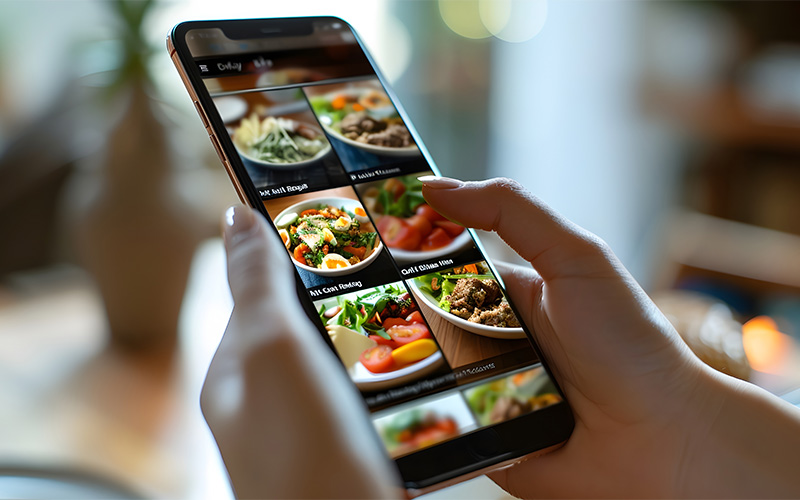
With AI, food recommendation isn’t just about repeating what you’ve liked before—it’s also about introducing new experiences. By identifying similarities between cuisines, ingredients, or preparation styles, the technology can suggest dishes you might not have otherwise considered. It expands culinary horizons in a way that feels organic rather than random. This subtle balance between familiarity and novelty keeps users engaged and encourages culinary exploration.
7. Streamlining Group Decisions
Group meal planning has always been tricky. Preferences, allergies, and budget constraints make reaching consensus difficult. AI simplifies this by aggregating individual preferences and finding overlapping options. Whether you’re choosing a dinner spot with friends or ordering office lunch, AI can find a middle ground quickly and accurately. It reduces back-and-forth discussion and ensures that everyone gets something they enjoy.
8. Analysing Food Trends
AI also keeps an eye on the bigger picture. By scanning social media, restaurant reviews, and delivery data, it identifies emerging food trends and integrates them into its recommendations. If a new dish is gaining popularity locally, the algorithm can suggest it ahead of the curve. This keeps the user experience dynamic and ensures that platforms remain culturally and regionally relevant. It’s a way to stay updated without actively searching—your food recommendations evolve with the world around you.
9. Reducing Decision Fatigue
With so many choices available, users can become overwhelmed. AI helps narrow down options based on what’s most likely to satisfy, making food recommendations feel more like a helpful assistant than a list of random suggestions. By filtering out irrelevant or repetitive choices, AI ensures users make satisfying decisions quickly. This efficiency saves time and reduces stress, especially during busy or indecisive moments.
10. Improving Platform Efficiency
On the backend, AI helps platforms manage inventory, predict demand, and optimise logistics based on user behaviour. While invisible to the user, these insights enable more reliable and timely food recommendations. If a restaurant runs out of a popular item, the system can offer alternatives in real time, ensuring a smoother experience. This seamless coordination contributes to overall satisfaction and keeps operations running smoothly.
Conclusion
Artificial intelligence has redefined how we receive food recommendations—from personal preferences and real-time context to health goals and social settings. It doesn’t just offer suggestions; it crafts meaningful, timely, and satisfying experiences that align with who we are and what we need. As AI continues to evolve, so will our relationship with food—becoming smarter, healthier, and more connected to our daily lives.
Visit Taste of SG for more info about this content and to explore how smart food recommendations can transform your dining experience.