
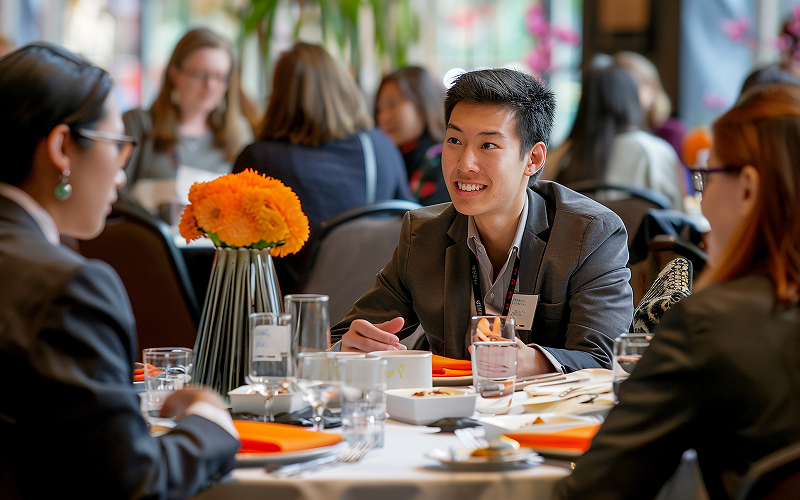
It happens over and over again. You’re sharing a pizza with friends or family when someone casually announces, “This is the best pizza in Singapore.” Nobody asks for proof. Nobody challenges the statement outright. Because at that moment, it makes perfect sense. That slice fits the mood, the hunger, the memory. And that’s enough.
In Singapore, calling something “the best” isn’t just a statement about quality. It’s about emotional weight. The pizza might be thick-crusted or barely topped. It might be a hawker stall creation or a late-night delivery special. It doesn’t matter. What matters is how it lands—on the tongue and in the heart.
The best pizza in Singapore isn’t necessarily the most expensive, the most photographed, or the most authentic to Naples. Often, it’s the one you didn’t have to think too hard about. It’s the one you knew would do the job.
Where Taste and Time Intersect
Ask anyone about their earliest memory of pizza and chances are, it wasn’t at a trattoria. It was probably on a plastic plate in a fluorescent-lit food court, a school party, or the corner of a birthday table with too much fizzy drink.
For many, it started with Pizza Hut. Its deep pan crusts and heavy toppings were synonymous with celebration. For a certain generation, it was the best pizza in Singapore—reliable, rich, and wrapped in nostalgia. The Stuffed Crust Super Supreme (S$26.90 for a regular pan) didn’t just fill you up—it felt like an event. There was a time when stepping into a Pizza Hut restaurant, with its red lampshades and booths, felt like eating overseas.
Then came Domino’s, with its thinner crusts, 30-minute delivery promises, and more Americanised branding. Its Classified Chicken pizza (S$24.90, large) became a staple in university dorms, family Friday nights, and Netflix marathons. The flavour wasn’t revolutionary, but it was consistent. It was warm, cheesy, and reliable.
In both cases, these weren’t gourmet experiences. They were rituals. They told you the weekend had arrived. They marked small victories. They fed more than hunger.
Slices from the Heartland
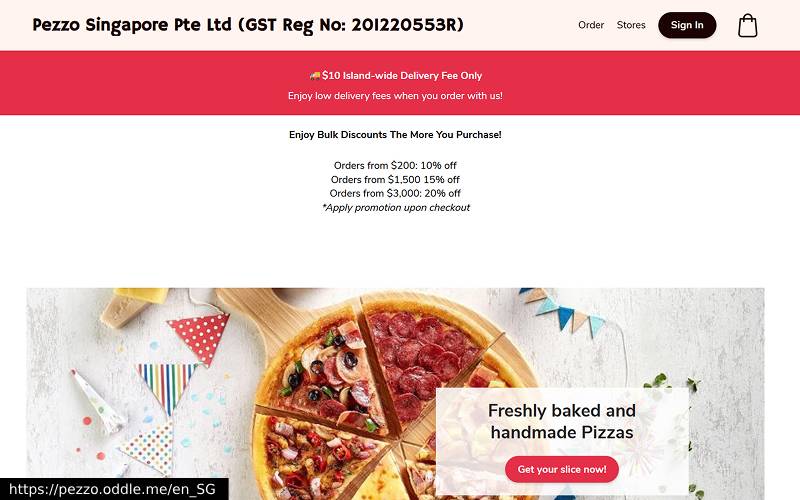
Beyond the chains, a quieter kind of pizza culture took root across Singapore’s neighbourhoods. It’s in the glass display cases of Pezzo, offering slices by the counter at MRT-linked malls. Their Pepperoni Party and BBQ Bonanza go for S$4.90 per slice. These are pizzas designed to be eaten standing up, or while walking between errands. They’re quick, heavy, and generously portioned. For students and busy workers, they’re a familiar fix.
Pizza in these settings isn’t about aesthetics or sourcing; it’s about immediacy, and when you’ve grown up with those flavours, it’s hard to shake their hold. These aren’t ironic comfort foods. They’re foundational, often forming the earliest ideas of what the best pizza in Singapore tastes like.
Pizza Puffs, Pastry Crusts, and Convenience Culture
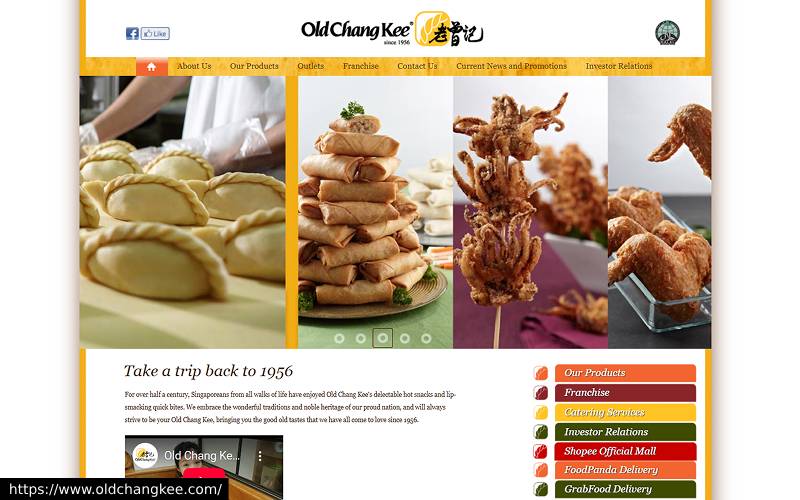
Walk into any Old Chang Kee outlet and you’ll find the humble pizza puff sitting beside curry puffs and sotong sticks. At S$2.20, it’s a pocket of processed cheese, tomato sauce, and chopped sausage in golden pastry. It’s not pizza by Italian standards but in Singapore? It counts.
That’s because pizza here isn’t just a cuisine; it’s also a concept. Anything warm, bread-based, and covered in something vaguely cheesy can evoke it. And Singaporeans, ever pragmatic, tend to be more focused on function than form. The pizza puff is one-handed. It’s satisfying. It gets the job done.
This flexibility in definition explains why so many locals have different mental models of what counts as the best pizza in Singapore. Some prize burnt crusts and basil. Others want thick cheese, chicken sausage, and sweet chilli sauce. And most would agree that both have their place.
When “Best” Has Nothing to Do with Technique
You could take a pizza purist and put them in front of a fast food slice, and they’d critique everything: the dough hydration, the lack of fermentation, the overly sweet sauce. But for someone who’s grown up eating that slice every other Friday night, none of that matters.
“Best” is rarely about objectivity. It’s not about wood-fired ovens, imported mozzarella, or DOC certification. It’s about what that pizza meant at the moment. Did it mark the end of a long week? Did it show up when you were too tired to cook? Was it there at the start of something: your child’s first party, your first meal in a new flat? For many, the best pizza in Singapore is defined by these very moments, not by ingredients or technique.
These are not qualities you can score. But they’re the ones that count.
Proximity Matters More Than Provenance
Another reason why people form strong opinions about their favourite pizza? Accessibility. Singaporeans are practical. A pizza may taste incredible, but if it’s S$38 and located two MRT lines away, it doesn’t enter daily conversation. It becomes a treat, not a touchpoint.
Compare that to a neighbourhood bakery that always has slices ready at 3 p.m. Or a hawker stall that adds mozzarella to its flatbread and calls it pizza. These are places you visit more than once. They become part of your rhythm. And soon, they start to define your idea of what the best pizza in Singapore should taste like.
In that context, “best” isn’t just about flavour. It’s about routine. It’s about what’s available when you need it.
READ MORE: Dining On A Budget: Singapore Hawker Centres
Familiarity as Flavour
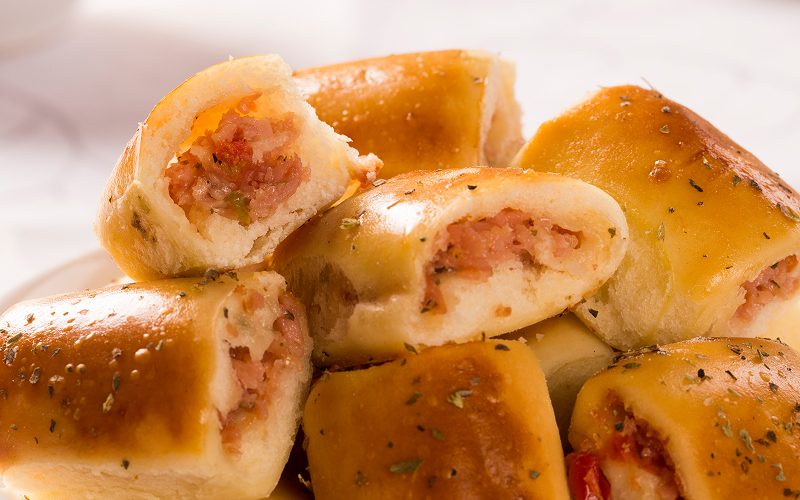
The brain is wired to find comfort in the familiar. That’s why certain pizza buns—with their dense bread and sweet ketchup-like sauce—feel just right to someone who’s eaten them since they were seven. It’s not nostalgia for nostalgia’s sake. It’s recognition. It’s rhythm.
And because pizza, more than most foods, lends itself to casual repetition—it becomes one of those dishes we stop questioning. We know what we like. We return to it. And every now and then, we call it the best. Sometimes, that familiar slice is exactly what we picture when we think of the best pizza in Singapore—not because it’s perfect, but because it fits.
Where You Eat Says Who You Are
In Singapore, food is never just food. Where you eat, how much you pay, and who you’re with all say something about you—whether you mean for it to or not. That unspoken awareness is especially true with pizza.
Someone who swears by the pizza buns at a Heartland bakery isn’t simply voicing preference. They’re also telling you something about routine, budget, and what kind of comfort they gravitate toward. On the other hand, someone who orders a burrata-topped, wood-fired pizza with a side of natural wine isn’t just describing taste—they’re signalling a lifestyle. And between those ends lies a wide, overlapping spectrum of what the best pizza in Singapore means to different people here.
In a city obsessed with food and status, pizza becomes an unexpectedly revealing marker. What you choose for a quick lunch versus what you order on a third date says a lot. Singaporeans are hyper-attuned to that context. This is why when someone claims they’ve found the best pizza in Singapore, the subtext might just be: this is who I am, or at least, who I want to be.
Budget Pizza Is a Category of Its Own (S$2–S$10)
Walk through any MRT-linked mall and you’ll spot them—rows of pre-cut pizza slices behind warm glass, stacked onto paper plates and eaten quickly in a food court corner or on the go. These are not afterthoughts. They are the city’s most accessible entry point to pizza.
Take Pezzo, for example. Known by many as offering some of the best pizza in Singapore, their 2-for-S$8.90 deals and wide distribution across shopping centres make them practically part of the urban fabric. You don’t have to search for them—they’re already there. Their flavours are bold, comforting, and built to please a crowd. The slices are big. The cheese is thick. And they hit a sweet spot between fast food and familiarity.
Then there’s The Breadyard at One-North, quietly serving sourdough-based pizzas under S$9. While their setting leans more café than a food court, the pricing makes it an accessible option for students and workers in the area. Their crusts are naturally leavened, their toppings thoughtful but unfussy. It’s where you go when you want something more refined without crossing into indulgence.
At the truly no-frills end are the Western stalls in hawker centres, often selling frozen-pan pizzas reheated in small ovens and served with crinkle-cut fries. These are pizza by name, but to many, they’re also lunch. For S$5 or less, you get a meal that’s hot, familiar, and filling. It may not impress your Italian friend, but for school kids and retirees in the queue, it does the job.
These budget options are not trying to compete with artisanal pizzaiolos. They exist for different reasons: consistency, price, and proximity. And that’s why they’re loved. Because in a city where everything is fast, structured, and expensive, sometimes the best pizza in Singapore is the one that fits neatly into a weekday without asking too much.
Mid-Range Pizzas Shape Urban Appetite (S$12–S$25)
Climb up a tier and you’ll find a very different story. Mid-range pizza is where Singaporeans begin to flirt with identity and aesthetics. It’s no longer just about eating—it’s about choosing. And the places in this category are as much about environment and intention as they are about toppings.
Alt. Pizza is a standout in this space and is often mentioned among those searching for the best pizza in Singapore. Located in spots like Suntec and Katong, it caters to the working crowd and young professionals. The branding is cheeky, the setting industrial-modern, and the pizzas come with names like “Truffle Shuffle” (S$22), topped with roasted mushrooms and white sauce. You order it not just because you like truffles, but because it feels like the right kind of indulgence—personal, casual, slightly elevated.
Then there’s Plank Sourdough Pizza, found in family-friendly neighbourhoods like Siglap and Dempsey. Prices hover around S$24–S$26, and the vibe is laid-back and communal. It’s the kind of place where parents split a pie while kids run around nearby. The menu balances Mediterranean standards with localised options. It’s a middle ground: not too formal, not too basic.
La Nonna in Holland Village brings something slightly older to the table. Known for its black truffle egg pizza (S$25), it appeals to diners looking for something richer, more rooted in tradition. It’s the kind of restaurant you suggest when you want to show thoughtfulness without seeming extravagant. A little classic, a little safe—but always satisfying, and often considered among the best pizza in Singapore.
This mid-range tier defines a large slice of urban dining. It’s where people land when they’ve moved past fast food but haven’t yet stepped into the slow-food scene. The pizza is better, yes—but so is the lighting, the playlist, the plating. You’re not just eating. You’re curating.
High-End Pizza as Performance (S$28–S$40)
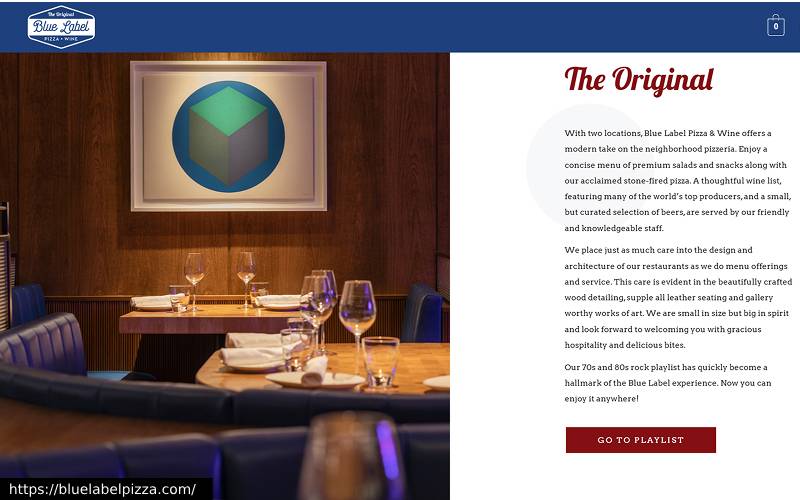
Then there’s the top tier, where pizza becomes less about comfort and more about craftsmanship. Here, you’re not just paying for flavour—you’re paying for sourcing, technique, and setting. The pizza becomes a showcase.
At Blue Label Pizza & Wine, the Umami Bomb (S$35) has earned cult status. The dough is robust, the edges are scorched just right, and toppings include shiitake mushrooms, anchovy oil, and kale. Served alongside natural wines in a dimly lit room with rock-and-roll aesthetics, it feels deliberate and curated. You’re here for the full experience, not just the crust.
Cicheti, tucked into a heritage shophouse on Kandahar Street, offers some of the best pizza in Singapore with its Neapolitan-style pies cooked in a wood-fired oven. Prices range from S$30–S$36. The crusts are blistered, and the ingredients are seasonal. Every detail—from the flour blend to the tomato origin—is thought through. Dining here feels like you’re witnessing a philosophy as much as a meal.
LINO, in Bukit Timah and Serangoon, leans into the slow luxury model. With options like fig and burrata pizzas (S$30+), it draws a steady crowd looking for softness, texture, and quiet. The energy is relaxed. It’s where you go to talk, linger, and savour.
These are the places you choose when you want pizza to impress—not with theatrics, but with precision. The kind of venue where one pizza feeds two and the wine is selected with as much care as the dough fermentation. It’s a statement—not just of taste, but of time and attention.
READ MORE: Discover And Learn 8 Amazing Asian Restaurants In Singapore
These Tiers Don’t Compete—They Coexist
What’s striking about pizza in Singapore is not the hierarchy but the harmony. The S$4.90 slice and the S$38 truffle pie aren’t at odds. They’re answering different questions. One is for now, the other for later. One is for every day, the other for something you plan. And people move between them. The same diner who orders Blue Label on a Friday might grab Pezzo at 3 p.m. on Monday. A student who grew up with hawker stall pizza may one day discover Plank and call it life-changing—not because it’s fancier, but because it reflects where they’ve arrived.
Taste isn’t static. It shifts with budget, exposure, and even relationships. What’s consistent, however, is how locals attach meaning to where they eat. Pizza, despite its foreign origins, is one of the most flexible mirrors for Singaporean food identity.
So. when someone says they’ve found the best pizza in Singapore, you now know to ask: where? How much? with whom? Because within those answers lies not just a slice, but a story.
A Slice That Tells a Story
Pizza didn’t just arrive in Singapore—it was invited, reinterpreted, and reshaped. Locals never treated it like a foreign delicacy that had to be preserved in its original form. They added sambal. They changed the cheese. They folded it into their routines until it became familiar.
That’s how food becomes part of culture: not by staying the same, but by being allowed to change.
In Singapore, fusion is rarely about novelty. It’s about storytelling. You’ll see this clearly at places like Spizza, where sambal prawns and curry chicken aren’t one-off experiments—they’re long-standing menu staples. These pizzas speak a language Singaporeans already know. They aren’t trying to shock. They’re trying to relate.
At Wild Child Pizzette, the pizzas arrive in small formats with toppings like Chinese sausage or pickled shallots. Each combination feels like a conversation between traditions, not a collision. These are pizzas that play with edge and memory at the same time.
Then there’s Saizeriya, a name that almost always draws raised eyebrows in food circles, yet fills its tables with families, students, and budget-conscious diners every day. Its pizzas hover between S$7 and S$11, and they carry an almost nostalgic charm—overloaded cheese, unexpected toppings, and a low-cost guarantee. It may not appear on any best-of lists, but for many, it’s part of the weekly rhythm.
These versions of pizza are not distortions. They’re local chapters in a global story. And if you ask someone why they love them, they’ll likely say, “It just hits differently.” That difference is what makes it theirs.
The Pizza That Brings People Together
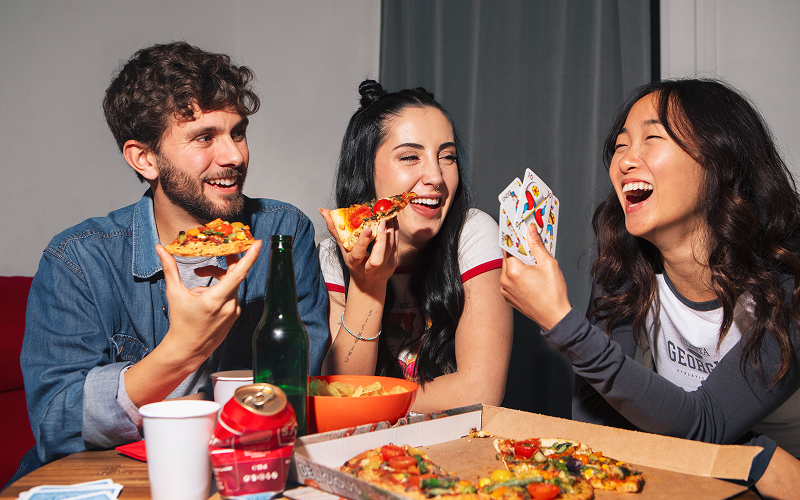
There’s something about pizza that makes people want to gather. Maybe it’s the shareability. Maybe it’s the fact that no one needs to argue over utensils or courses. Everyone just takes a slice and settles in.
In Singapore, pizza has become a quiet facilitator of moments. It’s there at birthdays, late-night office meetings, and casual movie nights. You’ll find it in void deck gatherings, on park benches, and in HDB stairwells after school. It’s the kind of food that moves across space and occasion without demanding ceremony.
Unlike other types of dining, there’s no pressure to serve pizza correctly. No one’s judging technique. You’re allowed to lean over the box, take what you want, and keep the conversation going. In that way, pizza flattens the hierarchy. It doesn’t belong to one group or demographic. It shows up for everyone.
This isn’t just about affordability or convenience. It’s about emotional neutrality. Pizza doesn’t require you to dress up, follow etiquette, or make conversation if you don’t want to. It fills silence, feeds groups, and leaves behind greasy fingers and full stomachs. That’s enough to make it meaningful.
The Rise of the Home-Based Baker
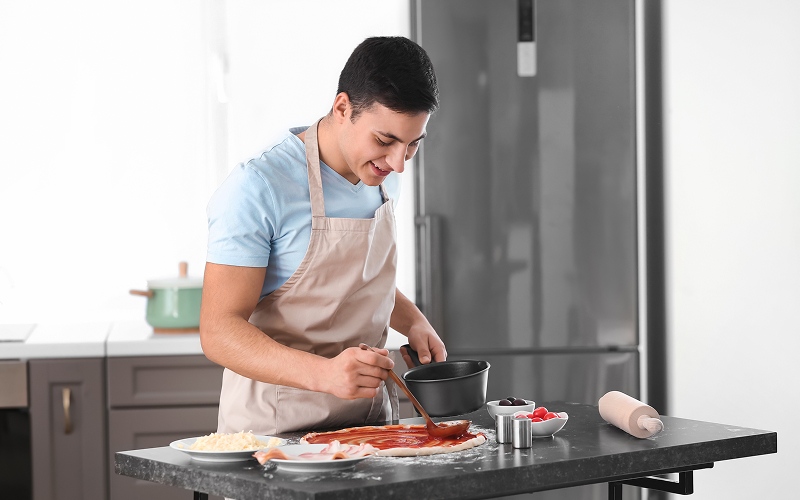
When lockdowns hit Singapore in 2020, something unexpected happened in kitchens all over the island. People started baking. Some for comfort, others for curiosity. Among them were a handful who started selling their sourdough pizzas to neighbours, friends, and eventually strangers on Instagram.
From that moment, a new wave of pizza makers was born—small-scale, personal, and quietly revolutionary.
Yeast Side, once a home-based business, now runs a physical outlet that still serves the kind of naturally fermented crusts that put them on the map. Their pizzas (S$26–S$30) are chewy, charred, and never rushed. The menu changes often. The vibe is laid-back. And their regulars don’t just come for the food—they come because it feels like a place that grew with them.
Then there’s The Pizza Project SG, an Instagram-only operation where orders open in limited batches and sell out quickly. The pizzas are handmade, unbranded, and delivered personally. It’s not about scale. It’s about trust. The customers aren’t buying a product—they’re supporting a person.
What makes these businesses compelling isn’t just the dough—it’s the intimacy. In a city where restaurants are often polished to perfection, these indie pizza makers offer something different: the imperfections of care. The feeling that you know where it came from, and who shaped it.
They’re not trying to define the best pizza in Singapore, but they’re quietly adding their names to the conversation.
What Locals Want Next
If pizza in Singapore continues to evolve—and it will—it won’t be because someone discovered a new topping. It’ll be because the context changed.
We’re already seeing hints of what’s ahead. Some bakers are experimenting with locally milled flour, adjusting hydration levels to suit the humidity. Others are testing plant-based cheeses that don’t just mimic dairy but bring new flavours entirely. These aren’t gimmicks. They’re adjustments to environment, values, and dietary shifts.
Imagine pizza workshops at community centres, where grandparents, teens, and foreign domestic workers knead dough side by side. Or food courts that offer customisable pizzas next to yong tau foo. It’s not hard to picture.
And don’t be surprised if the next trend is a revival. Thick-crust pan pizzas—once dismissed as outdated—could return in force, this time framed as nostalgic comfort food. The city has a way of bringing things back, only slightly reframed.
Singapore’s pizza scene doesn’t follow a single arc. It spirals, folds, and absorbs what the city wants at the moment. That adaptability is what keeps it alive.
Closing Reflection: More Than Just Sauce and Cheese
So what do locals really mean when they say they’ve found the best pizza in Singapore? They might be talking about a sambal-smeared slice from a chain or a chewy sourdough pie from a side alley bakery. Maybe it’s a two-for-one deal eaten quietly in a food court or a wood-fired masterpiece saved for birthdays. Whatever the form, the statement rarely refers only to flavour.
It names something more specific. A price point. A memory. A mood. A version of comfort that made sense in a particular moment. The best pizza is the one that felt right when you needed it, not because it was perfect, but because it was yours.
Singapore doesn’t have a singular pizza tradition. What it has is a constantly shifting culture of taste—layered with nostalgia, curiosity, class, and care. And that may be why the conversation about pizza never really ends.
Because in this city, a slice is never just a slice. It’s a reflection. Of who we are. And what we choose to hold on to.
Visit Taste of SG to discover more stories on where to dine, what to savour, and how Singapore’s evolving pizza culture continues to shape what locals truly mean by the best pizza in Singapore.